
Everything you'd want to know before you install.
A detailed look at how DataFirefly Verified Reviews — PrestaShop 8 and 9 customer reviews with rich snippets and AI summary works, why we built it the way we did, and the thinking behind the features above.
§ 01
Why a verified reviews module rather than Trustpilot?
Trustpilot, Trusted Shops and their competitors work well — but they're expensive (50 to 200 euros per month depending on volumes), they capture your reviews in their ecosystem, and they take a technical commission on each interaction. For a growing store, the monthly bill ends up far exceeding the cost of an embedded module. DataFirefly Verified Reviews takes the other path: your server, your database, your reviews, no commission. You pay 89 euros once and you sell with your reviews without recurring subscription.
§ 02
The review request workflow
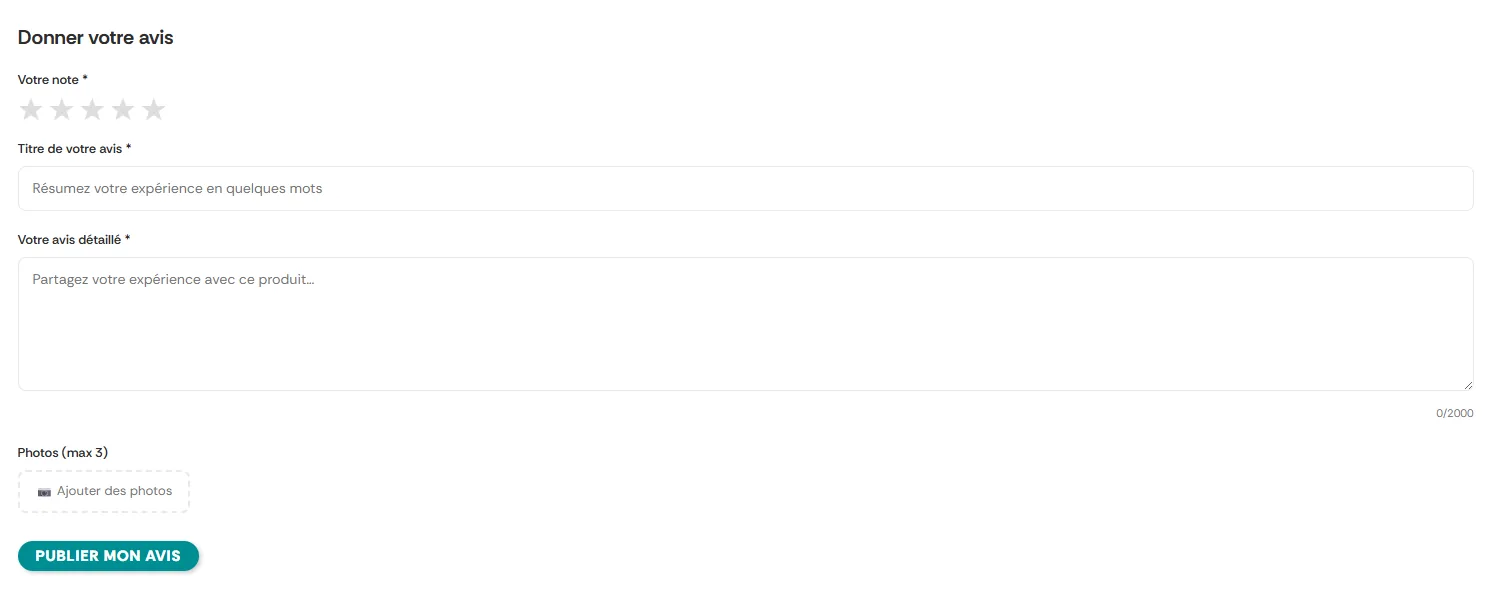
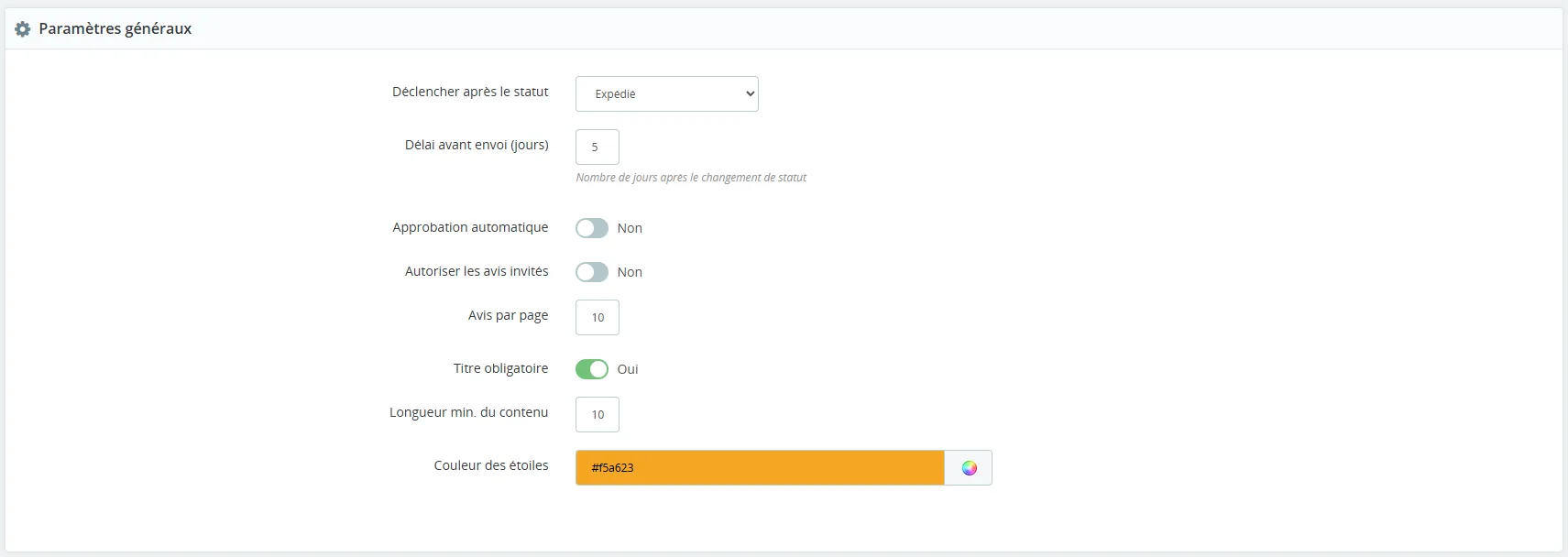
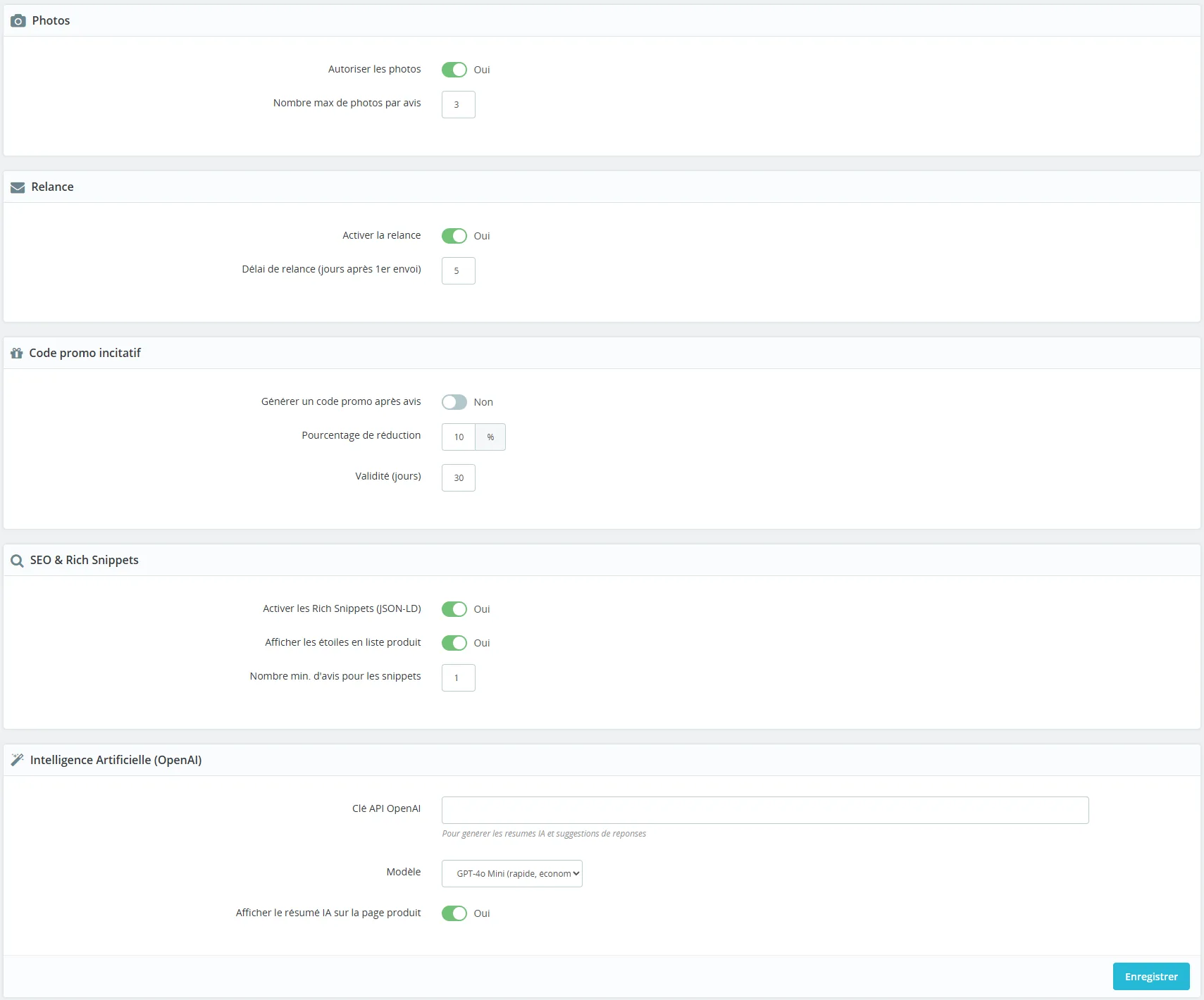
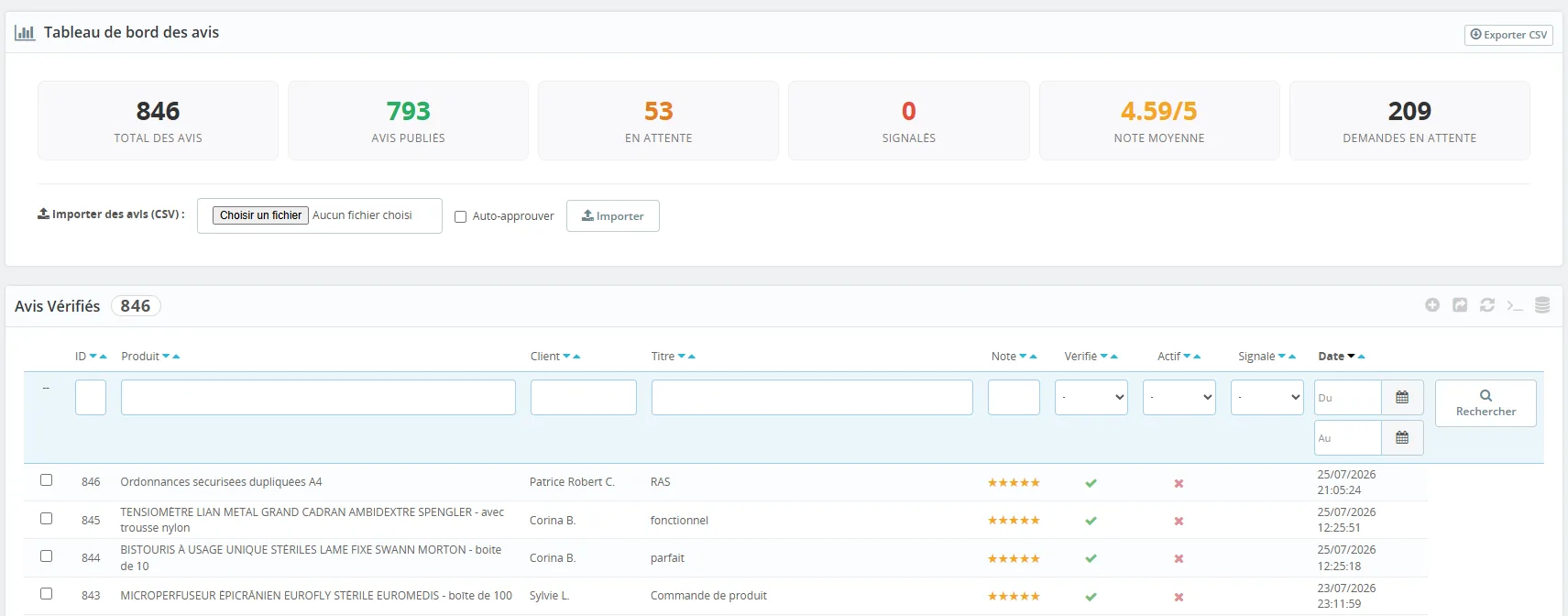
It's the heart of the system. You configure two things: the order status that triggers the request (default "Shipped" — to adjust according to your flow: handed over to carrier, delivered, etc.) and the delay in days (default 3, the time for the customer to receive and use the product). When an order crosses this status, the module adds a request to the queue with a calculated send date. A cron then sends the requests in batches of 50 with an email containing a personal tokenized link. The customer clicks, sees a dedicated form (rating + title + comment + photos + helpful vote), validates, the review is in moderation or published according to your configuration.
§ 03
AI summary, the killer feature of 2025
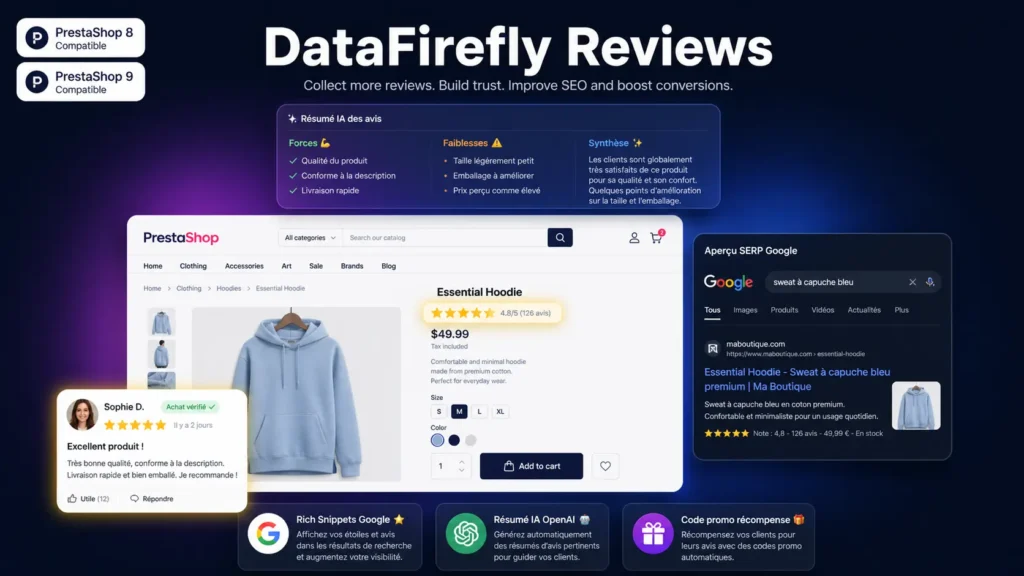
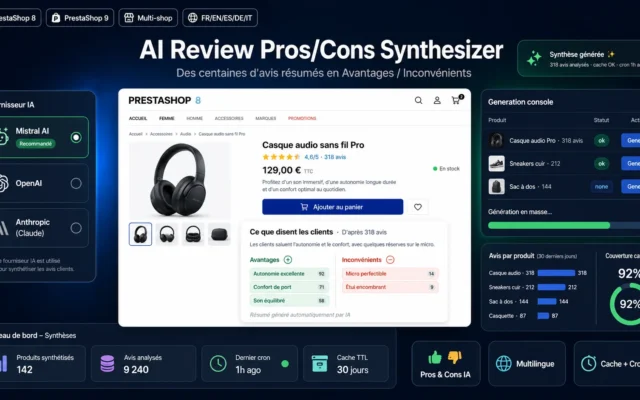
Product pages with 50, 100, 200 reviews have become unavoidable — but also impenetrable for a hurried visitor. The AI summary solves exactly this problem. Configure your OpenAI key in the module: from 3 reviews on a product, the cron sends all reviews (up to 100) to OpenAI with a specialized prompt that generates three structured elements: main strengths ("Comfort, fabric quality, fast delivery"), weaknesses or friction points ("Runs a little small, fragile packaging"), and an overall synthesis in two sentences. The summary is cached, recalculated when new reviews arrive, and displayed at the top of the review zone on the product page. The default model is gpt-4o-mini — the cheapest from OpenAI, ~0.5 cents per summary. You can choose gpt-4o or gpt-4-turbo if you want more finesse.
§ 04
Rich snippets and SEO impact
The module automatically adds Schema.org AggregateRating + Review structured data on each product page that has at least X reviews (configurable, default 1). Result in Google: golden stars will appear under your title in the SERP, which significantly increases organic CTR — it's documented by Google and confirmed by all SEO tools. On 1,000 impressions, going from 3% to 5% CTR means 20 additional visitors per query and per month. Across dozens of product pages, the cumulative effect far exceeds the cost of the module.
§ 05
Photos, helpful voting, merchant reply
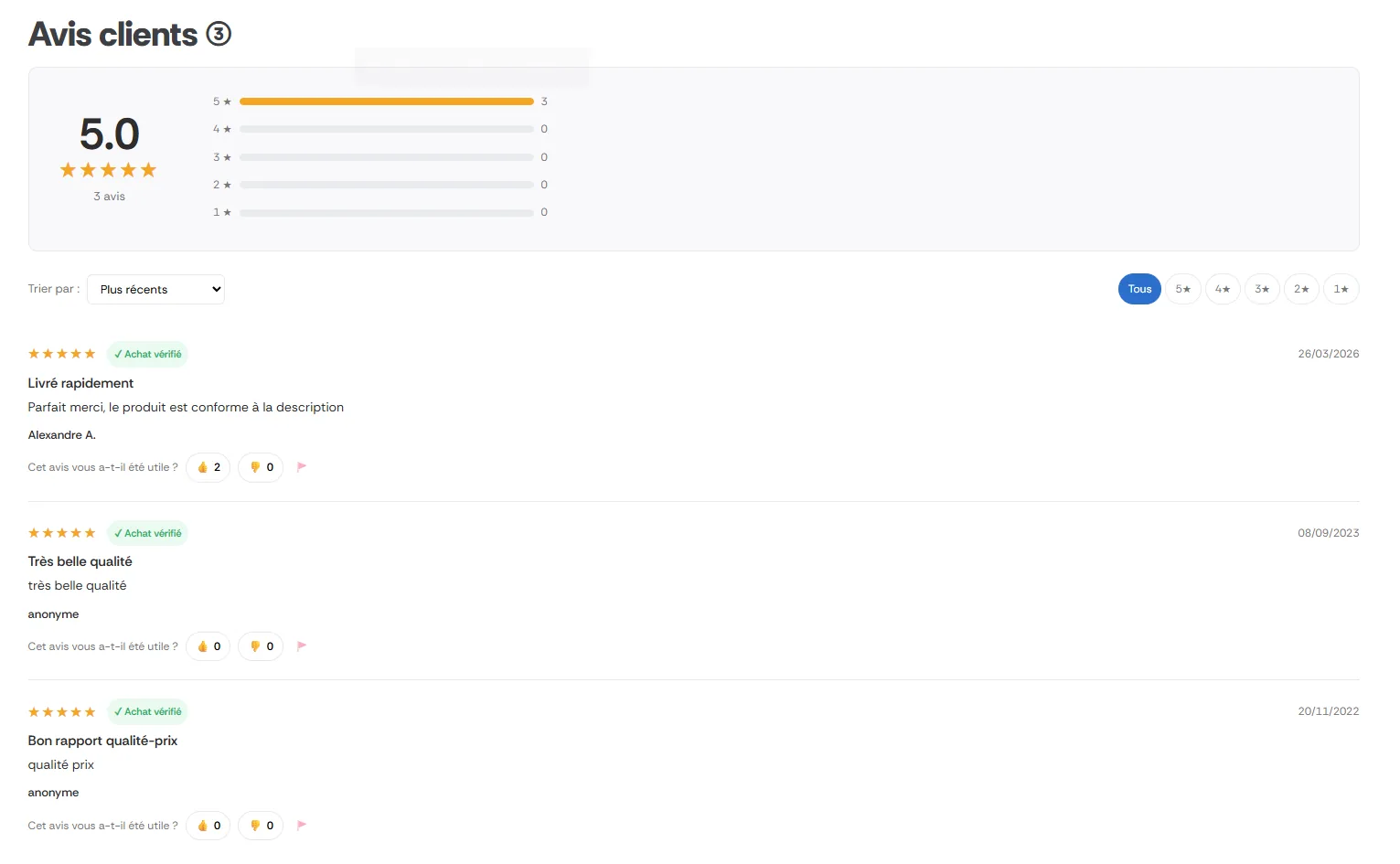
Three UX patterns that make the difference between a review system that collects and a review system that converts. Customer photos: up to N images per review (configurable, default 3) displayed as thumbnails with full-screen lightbox — reviews with photos convert significantly better because they add visual proof independent of your marketing photography. Helpful voting: visitors click "Helpful" / "Not helpful" on each review, which automatically surfaces the most useful reviews (anti-spam by IP + customer). Merchant reply: from the back office, you reply to a negative review or a delicate feedback — your reply appears under the review and turns a 1-star review into a customer service quality signal.
§ 06
Discount code as reward
One of the most effective levers to boost review return rate. Enable the option in the settings, define the percentage (default 10%) and validity duration (default 30 days). When a customer publishes a review, a unique discount code is automatically generated (native PrestaShop cartRule) and emailed. The code is nominal, single-use, and incentivizes repurchase. You can disable the incentive if you prefer the model without gift (some brands prefer the "unsolicited" review).
§ 07
Multi-store and clean architecture
Five dedicated tables (reviews, media, requests, helpful votes, AI summaries, statistics) with id_shop and id_lang on relevant records. Each sub-shop has its own configuration: OpenAI key, model, trigger status, delays, colors, ratios. Reviews are scoped by shop — a product in multiple shops can have distinct review sets. Statistics are updated incrementally (no full recalculation on each new review), so even a store with tens of thousands of reviews remains performant.
§ 08
Use cases
Fashion or equipment store: customer photos + helpful voting + reward code — you capitalize on photo social proof, which is what decides in fashion. Technical B2B: verified reviews + merchant reply + AI summary — your prospects landing on a product page understand in 10 seconds what other customers retained, accelerating the decision cycle. Cosmetics or food: rich snippets + reward code — stars in Google capture traffic, the discount code maintains repurchase. Marketplace or multi-brand: multi-store with one review set per shop — each sub-shop has its identity but benefits from the same technical infrastructure.


The module does the job well, reviews are collected automaticallyAutomatically translated