
For years, indexing was passive: you published, you submitted a sitemap, and you waited for Googlebot to eventually pass by. In 2026, waiting is a luxury. Catalogues change fast (prices, stock, new arrivals), competitors re-index continuously, and a new population of robots — AI crawlers — consumes your bandwidth without always sending you traffic. Taking back control of indexing and crawl has become a technical SEO project in its own right.
Push rather than wait: indexing APIs
Instead of waiting for the crawler to pass, you can notify engines as soon as a page changes. Two protocols make this possible:
- Google Indexing API: direct submission to Google of created or modified URLs.
- IndexNow: an open protocol that notifies Bing, Yandex, Naver and partner engines all at once.
For a store, the benefit is direct: a product back in stock, an updated price or a new page is known to engines in minutes, not days. An indexing API module automates these submissions for PrestaShop products, categories and CMS pages.
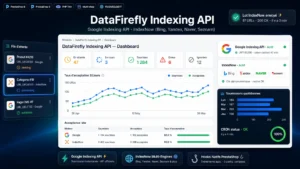 DataFirefly Indexing API — Automatic Google Indexing API and IndexNow submission (Bing, Yandex, Naver) for PrestaShop 8 and 9Instant submission of products, categories and CMS pages to IndexNow (Bing, Yandex, Naver, Seznam), and to Google Indexing API within the usage scope Google defines.€39.00
The newcomer: AI-bot crawling
GPTBot, ClaudeBot, PerplexityBot, CCBot and the like now roam the web to train or feed models. The problem: they can represent a significant share of the crawl, consume server resources, and scrape your content with nothing in return. But blocking them blindly can also deprive you of citations in answer engines — an emerging visibility channel. The right approach is granular control: allow what brings you visibility, limit what merely consumes. An AI crawler manager enables this fine-grained control on PrestaShop.
Measure what really happens: Search Console
You only steer well what you measure. Search Console’s coverage and performance reports tell you which pages are indexed, which are excluded and why. Accessing them without leaving the back office changes how often you act. An integrated Search Console connector brings this data directly into PrestaShop, as close as possible to the relevant pages.
Crawl budget: don’t waste the robots’ visit
Indexing fast is pointless if robots waste their crawl budget on useless URLs. Poorly managed faceted pages are culprit number one: thousands of non-canonical filtered URLs that dilute the crawl. A clean faceted engine, covered in our Core Web Vitals checklist and backed by indexable landing pages, concentrates the crawl on what matters.
And measurement on the analytics side
Indexing feeds traffic, but you still have to attribute it correctly. Clean tracking via Google Tag Manager — ideally server-side to withstand blockers — closes the loop between indexing, traffic and conversion. That is the role of a GTM & server-side module on the WooCommerce side.
Conclusion: indexing has become active
In 2026, indexing is steered: you push changes via Indexing API and IndexNow, you control AI-bot crawling, you measure in Search Console, and you protect the crawl budget. It is a concrete competitive advantage for those who seize it. To dig deeper, browse our guides E-commerce SEOSEO articles dedicated to e-commerce: meta tags, XML sitemap, multilingual hreflang, Schema.org structured data (Product, Offer, FAQPage), category pages, product pages, Search Console, technical audit, link building, international SEO.
Also worth reading: the complete e-commerce SEO guide and 301 redirects and 404 monitoring.
To put this into practice: our selection of modules to audit and steer your SEO.