


Everything you'd want to know before you install.
A detailed look at how Maintenance Mode & Coming Soon Page works, why we built it the way we did, and the thinking behind the features above.
A waiting page that builds anticipation, not an error page
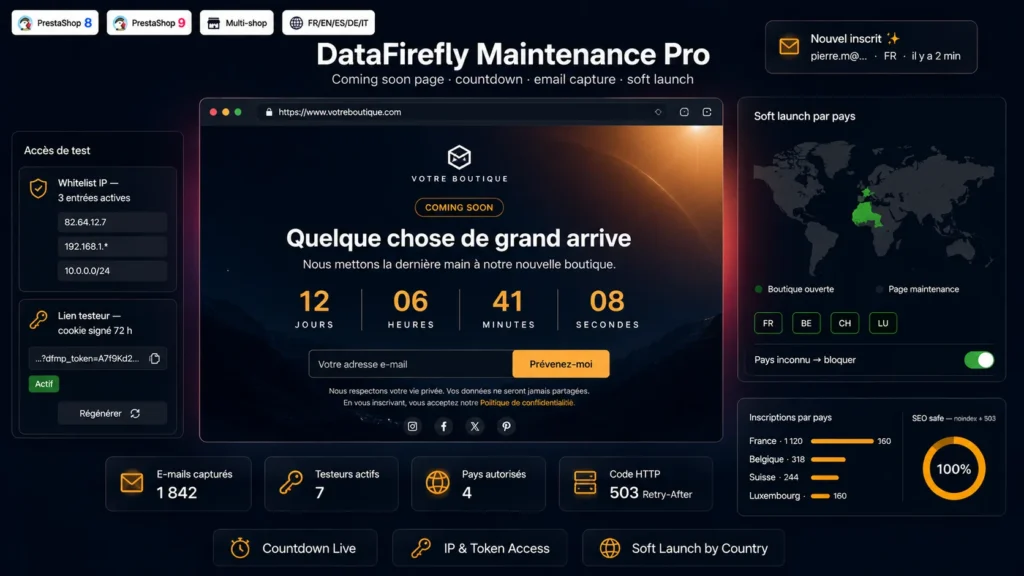
PrestaShop's native maintenance mode shows a bare message and shuts everything down. Maintenance Mode & Coming Soon Page replaces it with a real pre-launch page: logo, badge, title and message in your colors, animated glow accents and a countdown to launch day. The page is generated as a single self-contained HTML response — inline CSS and JavaScript, embedded SVG icons — so it renders instantly, even mid-deployment, and makes zero external requests.
Your testers work, your visitors wait
The store stays technically online: the module only intercepts unauthorized visitors. You, your developers and your testers get in through three doors: the IP whitelist (exact addresses, CIDR ranges, wildcards), the secret token link that sets a signed cookie with a configurable lifetime, or simply an active back-office session. If a link ever leaks, one click regenerates the token and revokes every granted access.
Launch country by country
Soft launch mode turns the waiting page into a progressive rollout tool: list the allowed countries (FR,BE,CH,LU for instance) and only those visitors see the real store. Detection relies first on CDN geolocation headers — Cloudflare, CloudFront, Vercel, nginx geoip — then on PrestaShop's GeoLite2 database when installed. You decide how visitors with an undetermined country are treated: caution or open doors.
Build your list before opening day
Every visitor can leave their email address to be notified of the launch. The AJAX form embeds an anti-bot honeypot, enforces per-store uniqueness and records the language, country and date of every signup. In the back office, the list can be filtered, bulk-cleaned and exported to CSV: on launch day, your emailing campaign is ready to go.
Flawless SEO and engineering
By default, the page returns an HTTP 503 status with a Retry-After header computed from your launch date and a noindex tag: search engines understand the downtime is temporary and keep your catalog indexed. An indexable 200 coming soon page remains one click away. On the engineering side: no overrides, a single hook, and a dedicated option lets payment webhooks through so an IPN is never blocked.
There are no reviews yet.